torsdag 16. januar 2014

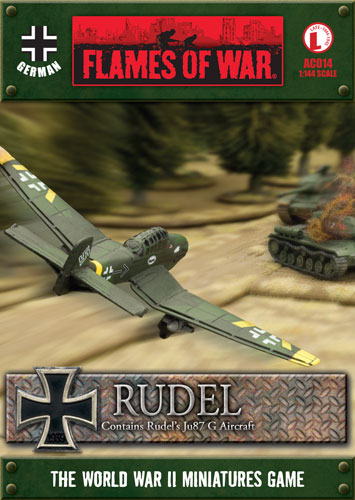
Oberst Hans-Ulrich Rudel (AC014)


Oberst Hans-Ulrich Rudel (AC014)Oberst Hans-Ulrich Rudel (AC014)
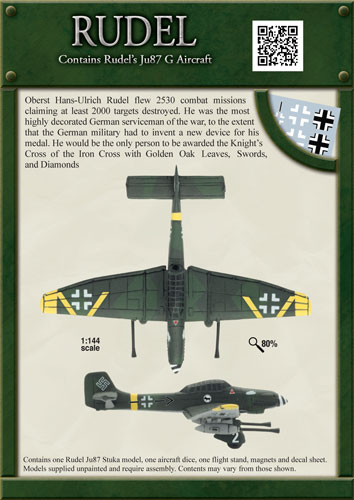
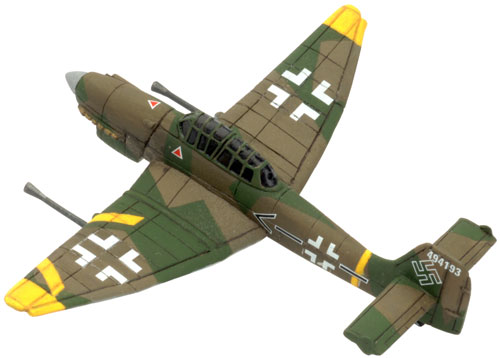
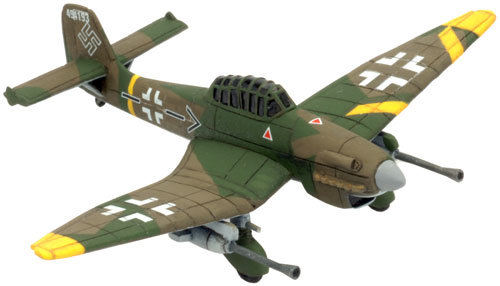
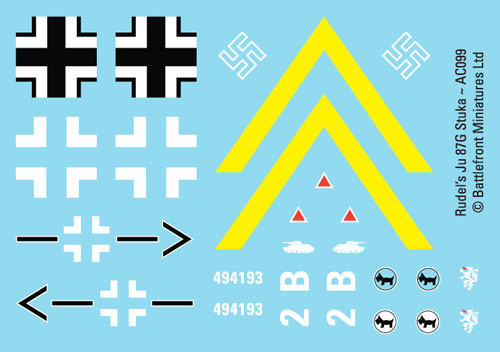
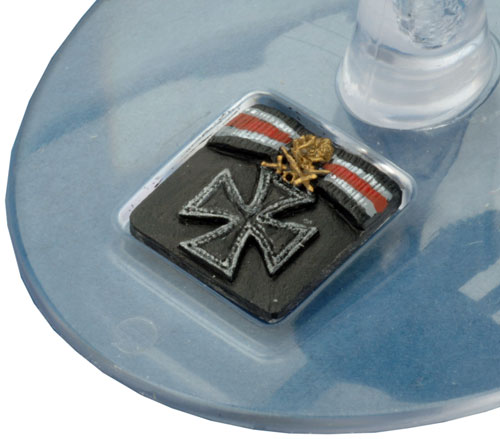
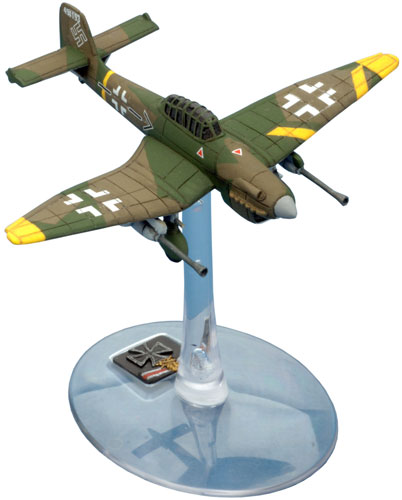
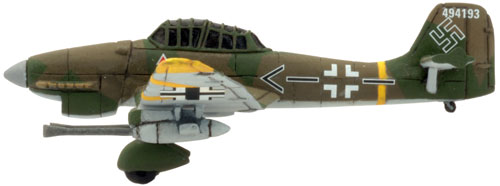
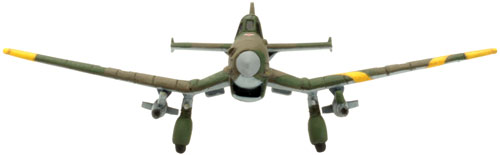
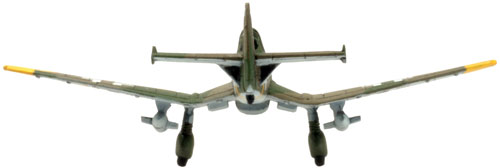
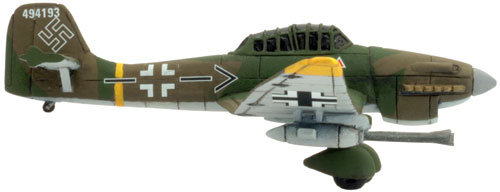
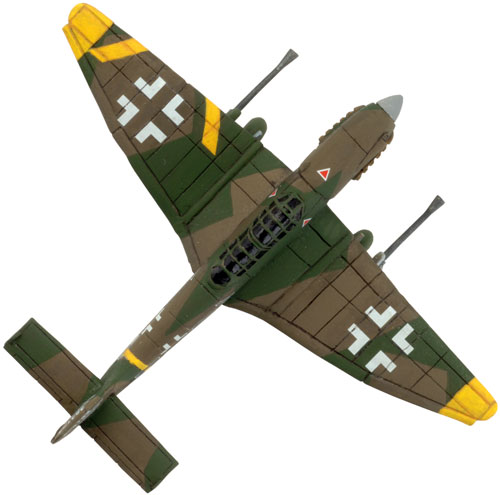
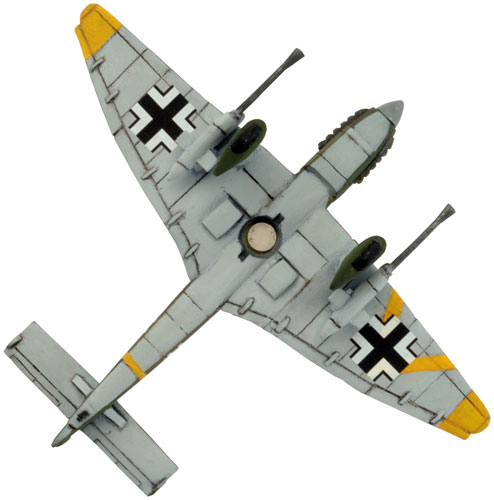
includes one Ju 87 Stuka with Ju 87D or Ju 87G options, one Aircraft die, one Rudel Warrior inlay, one Plastic flight stand, two Rare-earth magnets & Rudel decal sheet.

Hans-Ulrich Rudel was born on 2 July 1916. In late 1936, he joined the Luftwaffe as a cadet. During basic training, he had difficulty learning fighter piloting techniques and was eventually listed as unsuitable for aerial combat missions. In 1939, he was transferred to a reconnaissance unit and began his wartime career observing and taking pictures of enemy positions during the invasion of Poland.

In 1940, his numerous applications to be transferred to the dive-bombers were finally approved and he was then stationed in Caen, France during the Battle of Britain. A frustrated Rudel spent the entire battle assigned to a non-combat role. He then moved to the Mediterranean theatre where he once again sat on the sidelines during the battle of Crete.

Check out Oberst Hans-Ulrich Rudel in the online store here...
Desperate Measures!
January, 1945: In the west, the German Ardennes offensive failed to achieve its goal of forcing the Allies to the negotiating table. In the east, the Germans traded ground for time, falling back into western Poland and east Prussia and establishing Festerplatz,
or fortress cities. Despite the setbacks, Germany itself was still in German hands and the Allied advances had all been stopped.

Learn more about Desperate Measures! here...
Desperate Measures!
Oberst Hans-Ulrich Rudel (AC014)Finally on 23 June 1941, Rudel flew his first combat missions in the opening days of Operation Barbarossa, the invasion of the Soviet Union. It took him less than a month to win the Iron Cross, First Class, in recognition of his abilities on the battlefield.

On 23 September 1941, Rudel and a fellow dive-bomber pilot scored hits that resulted in the sinking of the Soviet battleship Marat, while it lay in the Leningrad harbour. By 1942, Rudel had over 400 missions under his belt and had been awarded the Knight’s Cross, Germany’s highest honour.

In early 1943, Rudel, now with a world record of 1000 combat sorties flown, traded dive-bombing for anti-tank missions, using the specialised Ju-87G Kanonenvogel (Cannon Bird) Stuka armed with two 3.7cm cannon, each carrying six rounds. He took to the job with ease, claiming over 100 destroyed Soviet tanks at the Battle of Kursk alone.

By March 1944, Rudel had clocked over 1800 sorties and 204 tanks destroyed. He was now the commander of his group, III. Gruppe, 2. Sturzkampfgeschwader (3rd Group, 2nd Divebomber Wing). He was such a success that Hitler wanted him grounded for fear of losing the popular war hero. Rudel refused and the Führer backed down.
Oberst Hans-Ulrich Rudel (AC014)Oberst Hans-Ulrich Rudel (AC014)
In November 1944, Rudel was wounded and flew several missions with his leg in a plaster cast. Then, in February 1945, Rudel’s Stuka was hit by anti-aircraft fire. Badly wounded once again in the leg, he crash-landed behind German lines before losing consciousness. He was saved by his observer and gunner, Ernst Gadermann who, by a stroke of luck, was a trained doctor. Gadermann applied first aid, but in the end Rudel lost his leg below his knee.

Rudel recovered and by 25 March 1945, he was flying again. He claimed an additional 26 tanks before the war in Europe ended in May. To this day, Rudel’s record remains staggering. He was the most highly decorated German serviceman of the war, to the extent that the German military had to invent a new device to add to his full Knight’s Cross with Oak Leaves, Swords, and Diamonds. He would be the only person to be awarded the Knight’s Cross of the Iron Cross with Golden Oak Leaves, Swords, and Diamonds.

Rudel flew 2530 combat missions claiming at least 2000 targets destroyed. These included 800 vehicles, 519 tanks, 150 artillery pieces, 70 landing craft, nine aircraft, four armoured trains, several key bridges, a destroyer, two cruisers, and the Soviet battleship Marat.


Designed by Evan Allen
Painted by James Brown
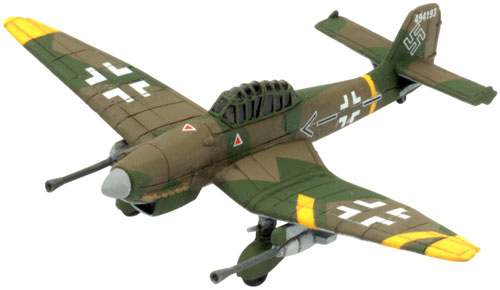
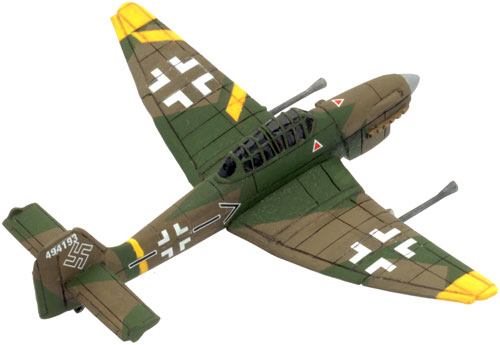
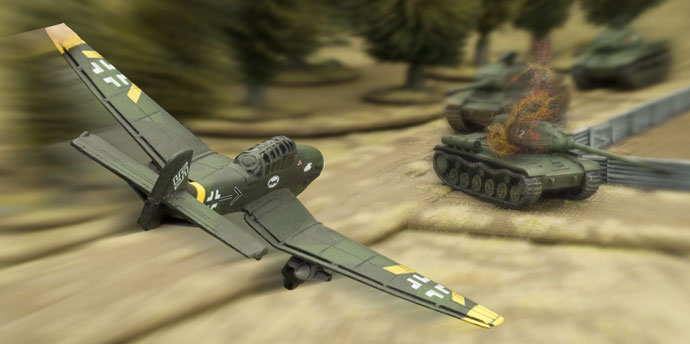
Oberst Hans-Ulrich Rudel’s Ju-87G Stuka in Flames Of War
AircraftWeapon To Hit Anti-tank Firepower Notes 
Rudel's Ju 87G Stuka3.7cm Cannons 2+ 113+ Charmed, Stuka ace.
Ju 87D StukaBombs4+51+-
Oberst Hans-Ulrich Rudel (AC014)Oberst Hans-Ulrich Rudel (AC014)
Characteristics
Oberst Hans-Ulrich Rudel is mounted in a Ju-87G Stuka. He may join a Panzer Kampfgruppe (page 68 of Desperate Measures) or a Panzergrenadier Kampfgruppe (page 72 of Desperate Measures) for +175 points.


Rudel uses all of the normal Ground Attack Aircraft rules with the following exceptions and abilities.
Oberst Hans-Ulrich Rudel (AC014)Oberst Hans-Ulrich Rudel (AC014)Oberst Hans-Ulrich Rudel (AC014)
Rudel ArrivesRudel has an Air Support Pool of five dice. He arrives to support your operations using all of the normal Aircraft rules. When Rudel arrives, he always does so as a flight of one aircraft.
Oberst Hans-Ulrich Rudel (AC014)Oberst Hans-Ulrich Rudel (AC014)
Charmed
If Rudel is shot down, he is not permanently destroyed. Instead, he and his Ju-87G Stuka have made a lucky escape and will return the next time you successfully request Ground-attack Aircraft.
Oberst Hans-Ulrich Rudel (AC014)Oberst Hans-Ulrich Rudel (AC014)
Stuka Ace
Rudel automatically Ranges In on his target team, even if it is Concealed from Aircraft (see page 184 of the rulebook).

Instead of rolling To Hit like normal aircraft, choose an enemy platoon (or an Independent or Warrior team) under the template. As usual, Independent and Warrior teams Join a platoon using the rules on page 74 of the rulebook.

Rudel then rolls two dice. For each result of 2+, he scores a Hit against teams under the template from the chosen platoon. Despite being a flight of one aircraft, Rudel never has to re-roll successful rolls to hit targets.

These Hits are allocated using the Allocating Hits to Target Teams rules for normal Shooting on pages 93 to 96 of the rulebook. These Hits are then resolved using the Aircraft rules on pages 187 to 189 of the rulebook.
Oberst Hans-Ulrich Rudel (AC014)Oberst Hans-Ulrich Rudel (AC014) 
Rudel Claims Another Victim
Oberst Hans-Ulrich Rudel (AC014)

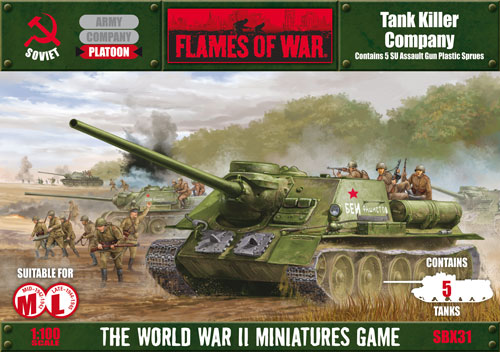
Tank Killer Company (SBX31)

Tank Killer Company (SBX31)Tank Killer Company (SBX31)
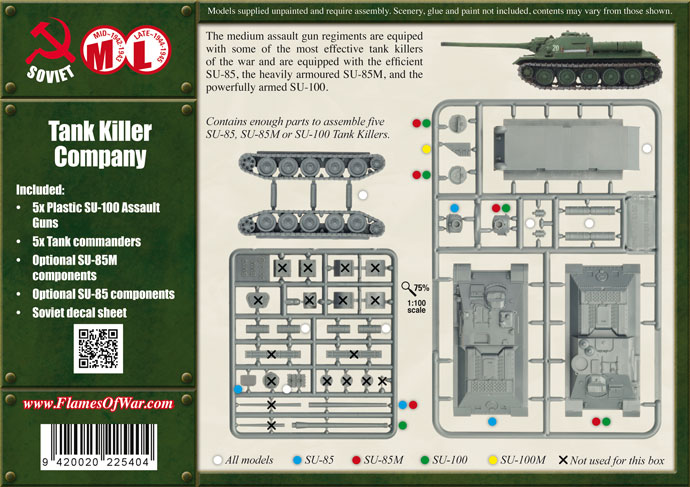
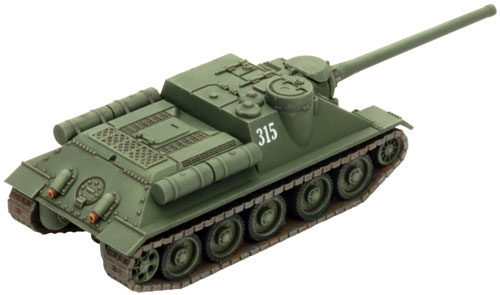
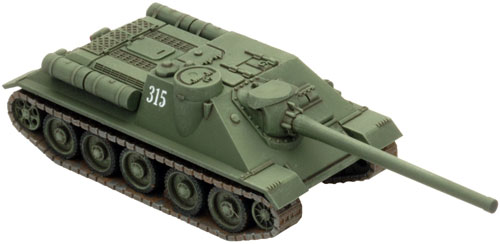
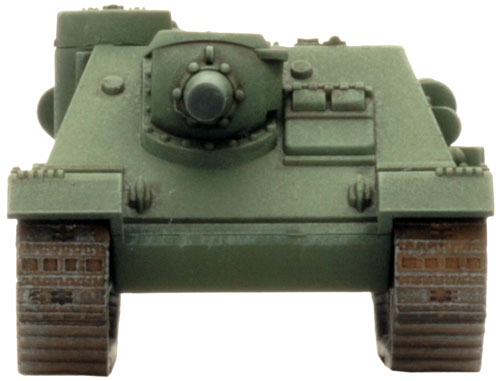
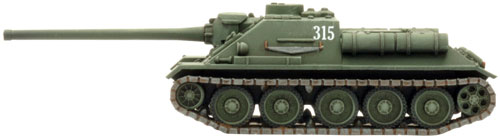
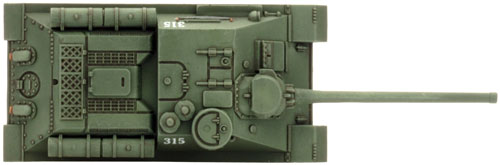
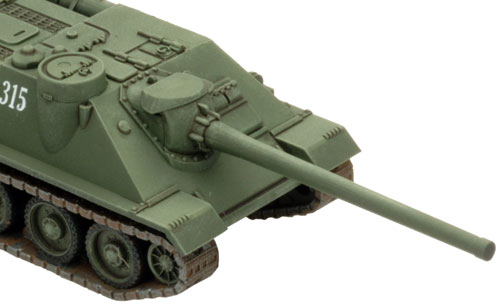
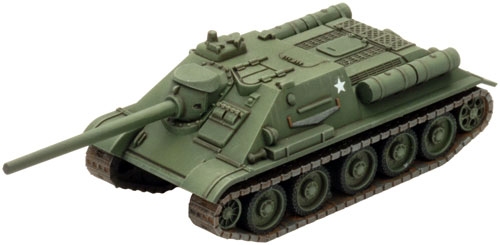
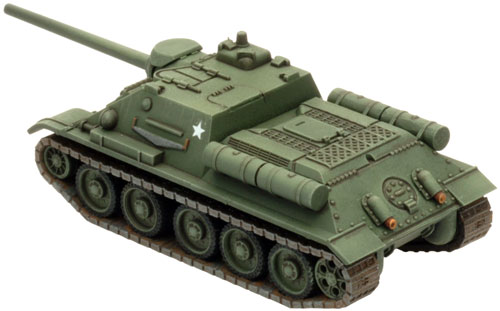
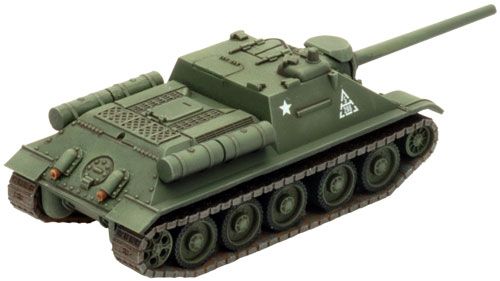
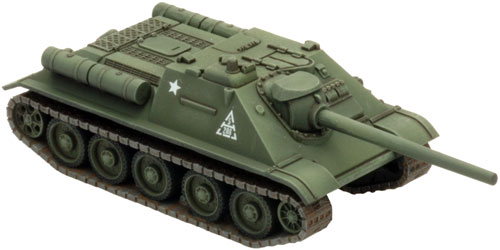
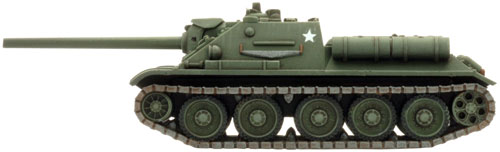
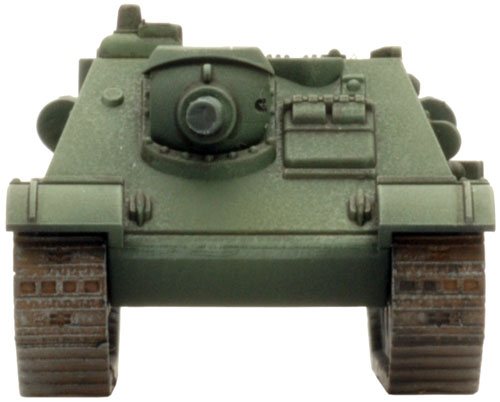
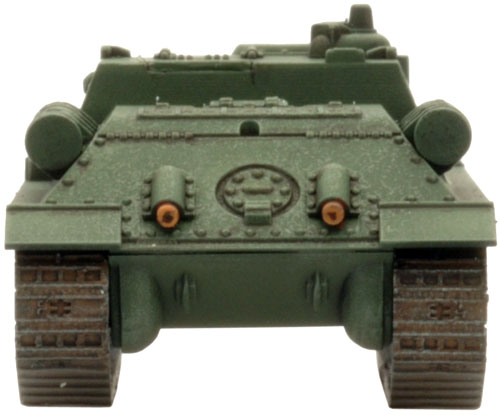
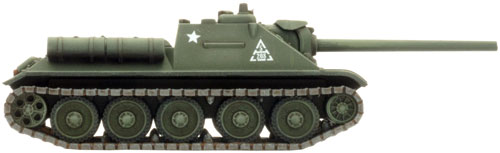
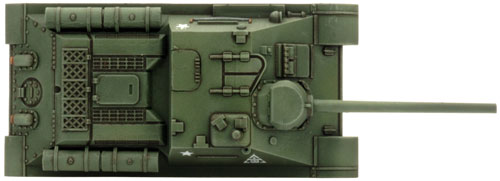
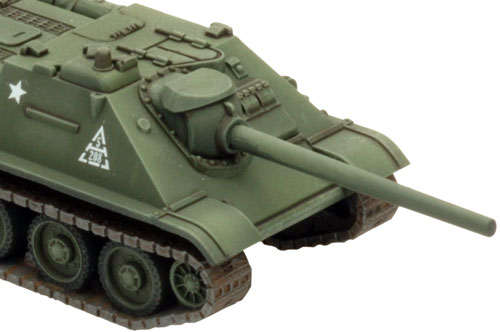
includes five all-plastic SU-100 Assault Guns with Optional SU-85M, SU-85 & SU-100M components, one Tank Commander sprue & one Soviet Decal Sheet.

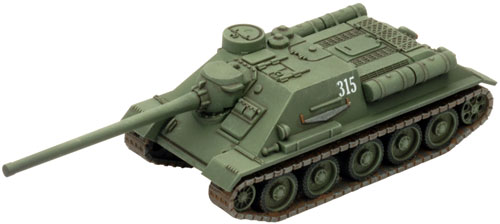
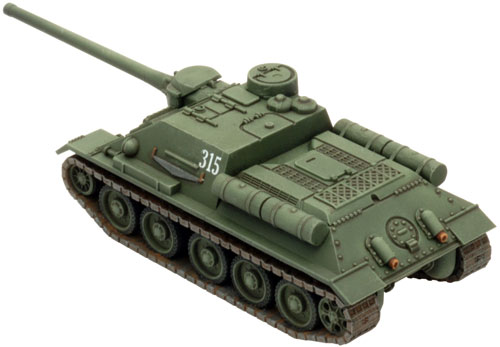
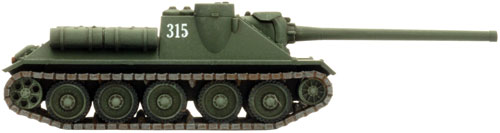
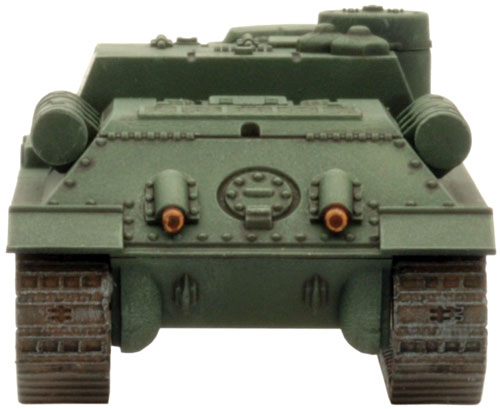
The SU-100 self-propelled gun was the successor to the SU-85. It was based on a similar, but not identical, chassis mounting a 100mm D-10S gun. This excellent gun could penetrate 162mm of armour at 500 meters and 150mm at 1000 meters range.
Desperate Measures!
January, 1945: In the west, the German Ardennes offensive failed to achieve its goal of forcing the Allies to the negotiating table. In the east, the Germans traded ground for time, falling back into western Poland and east Prussia and establishing Festerplatz,
or fortress cities. Despite the setbacks, Germany itself was still in German hands and the Allied advances had all been stopped.

Learn more about Desperate Measures! here...
Desperate Measures!
Tank Killer Company (SBX31)
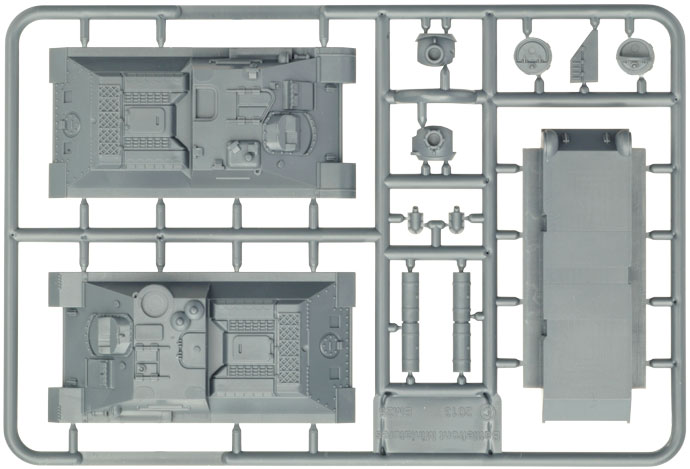
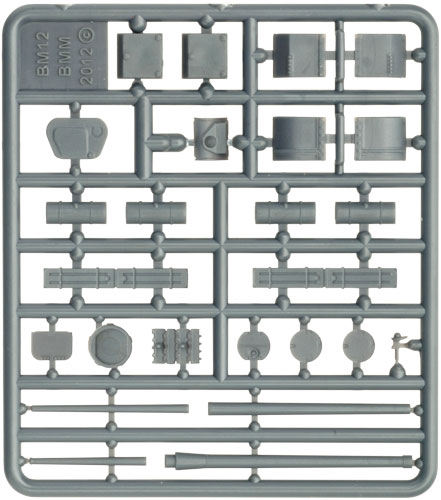
The Plastic Component Sprues
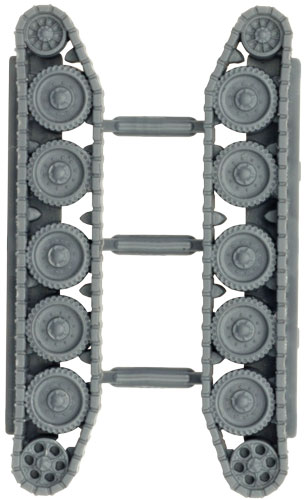
Below: The Hull spure.
Tank Killer Company (SBX31)
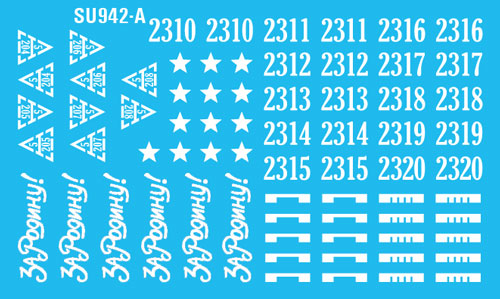
Below: The Accessory sprue.Below: The Track sprue.Below: The Decal sheet.
Tank Killer Company (SBX31)Tank Killer Company (SBX31)Tank Killer Company (SBX31)
The SU-100 
Tank Killer Company (SBX31)Tank Killer Company (SBX31)
The hull was improved from the SU-85 assault gun with the addition of a commander’s cupola, the same as that found on the T-34/85 tank. It was housed in a cylindrical casemate to the right of the gun.
Tank Killer Company (SBX31) Tank Killer Company (SBX31)
In 1944 the first 500 SU-100 assault guns rolled off the production line at the Uralmarch factory in Sverdlovsk (now Yekaterinburg).Another 1175 were built in 1945. They began replacing SU-85 assault guns in the medium assault gun regiments and brigades in late 1944.
Tank Killer Company (SBX31)Tank Killer Company (SBX31)
The SU-100 in Flames Of War
   Armour   
Name Mobility Front Side Top Equipment and Notes 
Weapon Range ROF Anti-tank Firepower  
SU-100Slow Tank95 1Overloaded.
100mm D-10S gun40"/100cm 116 2+ Hull mounted, Cat killer.
Tank Killer Company (SBX31) Tank Killer Company (SBX31)
Overloaded
Super-heavy tanks and heavily-laden assault guns often overload their engines and suspensions, making them very poor at crossing obstacles.


When required to take a Bogging Check to cross Difficult Going, an Overloaded vehicle becomes Bogged Down on a roll of 1 or 2, rather than the usual 1. An Overloaded vehicle must re-roll successful Skill Tests to cross Very Difficult Going.
Tank Killer Company (SBX31)Tank Killer Company (SBX31)
Hull-mounted Guns
Some tanks mount weapons in the front of the hull instead of in a turret to save weight or to make them easier to produce.


A hull-mounted weapon mounted in the front of a vehicle has a 180-degree Field of Fire covering everything in front of a line drawn across the front of the vehicle. If the weapon is mounted at the rear of the vehicle, the Field of Fire covers everything to the rear of a line drawn across the rear of the vehicle.
Tank Killer Company (SBX31)Tank Killer Company (SBX31)
The SU-85
The SU-85M assault gun was a stop-gap measure utilising the new improved hull built for the SU-100. Not enough 100mm D-10S gun were initially available, so 85mm D-5 S-85 guns were mounted some early production hulls. The major advantage of the new hull was that is could carry up to 60 rounds instead of 48 of the SU-85 hull.
Tank Killer Company (SBX31)Tank Killer Company (SBX31)
The SU-85M
Due to a shortage of the powerful 100mm D10-S gun; some vehicles that were destined to become SU-100s were fitted with the smaller 85mm D-5S instead. The version was designated the SU-85M and mated the hull of the SU-100 with gun of the SU-85.

Designed by Will Jayne
Painted by James Brown
Tank Killer Company (SBX31)Tank Killer Company (SBX31)
The SU-85 & SU-85M in Flames Of War
   Armour   
Name Mobility Front Side Top Equipment and Notes 
Weapon Range ROF Anti-tank Firepower  
SU-85Standard Tank55 1 
SU-85MSlow Tank951Overloaded.
85mm D-5S gun*32"/80cm 2123+ Hull mounted, Cat killer.
* = Both the SU-85 and the SU-85M are armed with the 85mm D-5S gun.
Tank Killer Company (SBX31)Tank Killer Company (SBX31)
Cat Killers
The medium self-propelled guns used their accurate longrange anti-tank weapons to support Soviet troops against German tanks.

Assault guns from a Medium Assault Gun Company do not use the Volley Fire special rule. Instead, assault guns from a Medium Assault Gun Company that did not move in the Movement Step may re-roll failed rolls To Hit when shooting their main guns at platoons with all teams more than 16”/40cm away.
Tank Killer Company (SBX31)Tank Killer Company (SBX31)

søndag 12. januar 2014

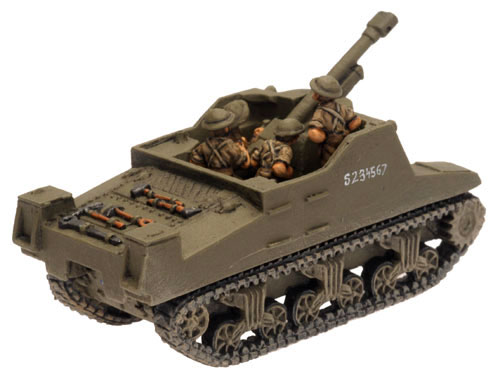
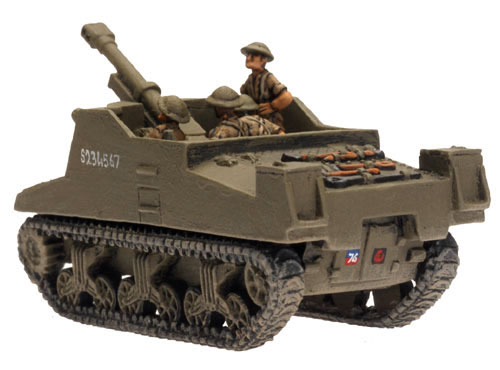
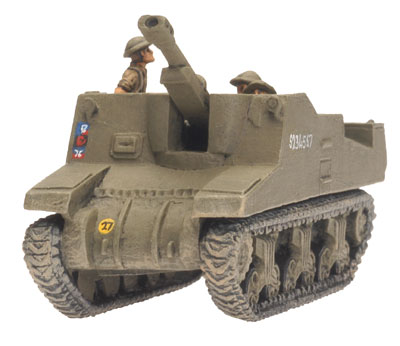
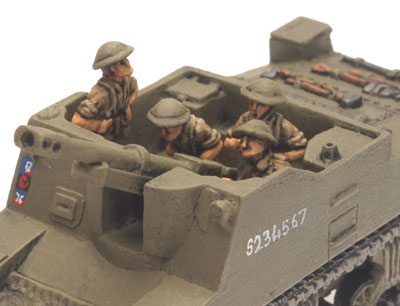
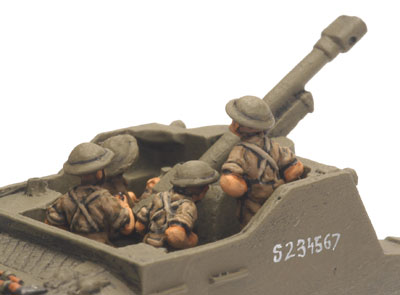
Sexton (BR172)

Sexton (BR172)Sexton (BR172)
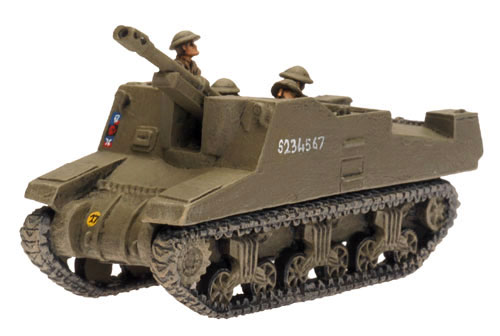
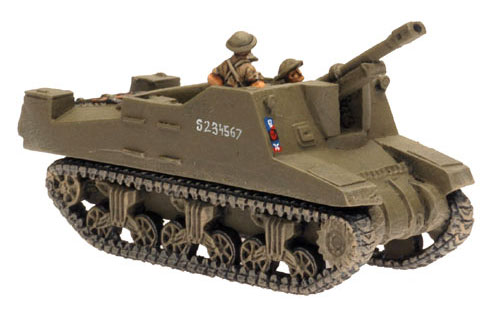
25pdr Self-propelled Gun Howitzer


With the build up of British armoured forces in early 1942 a number of requests for self-propelled artillery support from Armoured Divisions in North Africa were received. They wanted artillery support that could travel with the tank columns. This would allow armoured divisions to operate self-sufficiently while mobile.
The Sexton was designed in 1942 to meet these demands. The British General Staff decided to duplicate many of the features of the battle proven American M7 Priest. Instead of the American 105mm they decided that the 25-pdr field gun should be mounted on the vehicle.

It was decide to utilise Canadian production facilities and base the new weapon in the hull of the Canadian RAM tank, itself, like the M7 Priest, based on the US M3 medium hull.
Sexton (BR172)
Sexton (BR172)The RAM was already discarded as a viable design so the chassis was made available for a number of different projects.

Production started in early 1943 at the Montreal Locomotive Works. The vehicle  proved successful and production was continued and by the close of 1945 a total of 2,150 Sextons had been built.

During 1944 the Sexton replaced existing M7 priests in one Field regiment of each Armoured Division in British service. By the Normandy landings the Sexton had virtually replaced the US Priest in the British Army.

It carried a crew of six and was armed with one 25pdr field gun. 
In Flames of War
Self-propelled artillery is great for relocating when under pressure during a game, or repositioning when you run low on targets.
    
The armoured protection (front 1) of the Sexton gives you enough protection from infantry fire to protect the crew.

Like their towed cousins they can be fielded in 8 gun batteries and get all the same special rules.

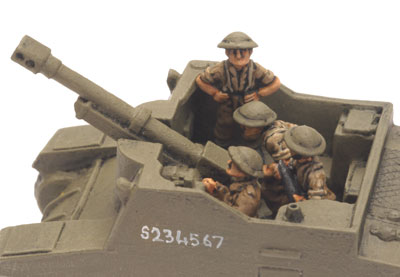
Designed by Evan Allen
Gun by Karl Cederman
Painted by Wayne Turner


Extra crewman added by Wayne, pack comes with 3 crew.
Sexton (BR172)
Sexton (BR172)Sexton (BR172) 
Sexton (BR172)Sexton (BR172)

fredag 10. januar 2014

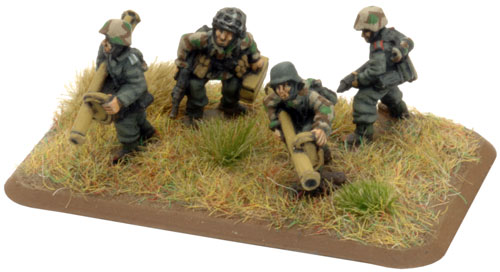
Tank Hunters (GE728)

Tank Hunters (GE728)


Tank Hunters (GE728)Tank Hunters (GE728)
includes two Panzershreck teams, twelve Panzerfaust figures & two Medium four-hole bases.

The Panzerschreck and Panzerfaust gave the German infantrymen an effective way of combating enemy tanks. Highly effective and simple to use, these weapons become fear by every Allied tanker.

Check out the Tank Hunters in the online store here... 
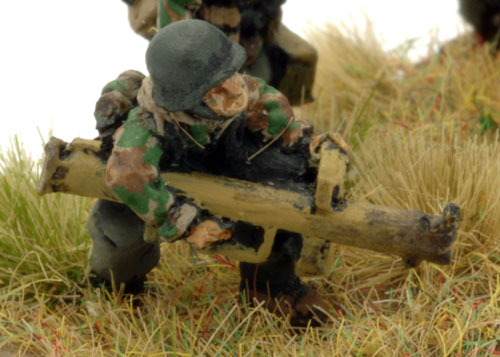
The Panzerschreck
The Panzerschreck is a classic case of the Germans seeing a good idea and improving on it. In early 1943 the Germans captured their first US Bazookas in Tunisia and quickly rushed them back to Germany for investigation and testing. They liked what they saw and immediately started work on their own version.

It was decided to make the calibre 8.8cm rather than the 6cm of the Bazooka, which made both the projectile and the weapon heavier than the Bazooka, but gave it more punch. 
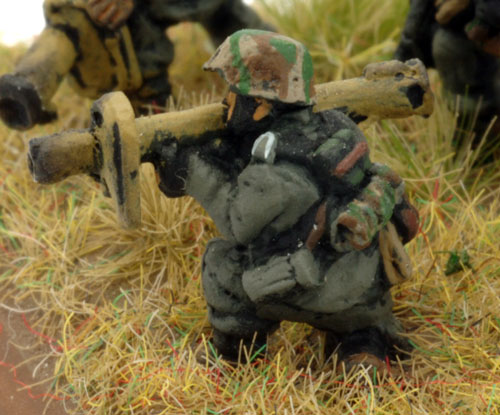
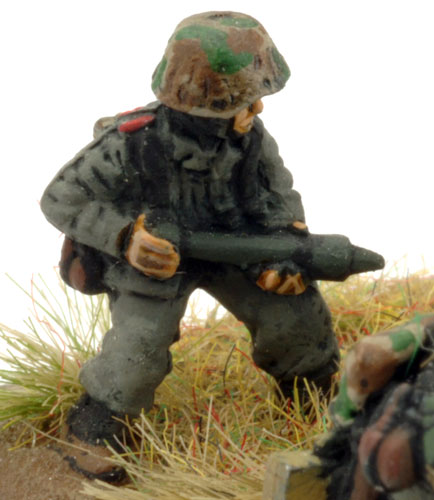
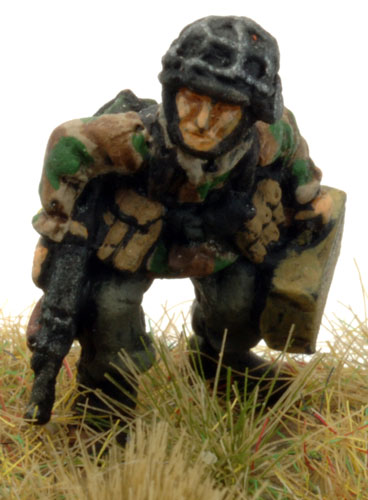
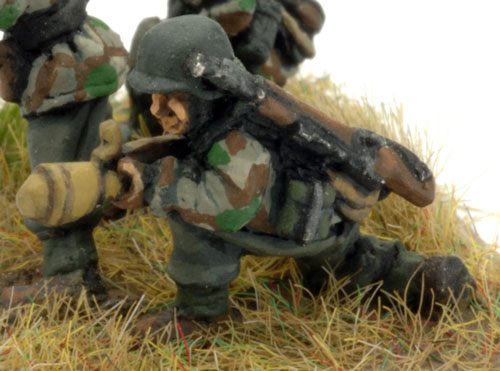
Painted Examples Of The Panzerschreck Figures
Tank Hunters (GE728)Tank Hunters (GE728)Tank Hunters (GE728)Tank Hunters (GE728)
Two of each of the figures shown above are included in the pack.
The Panzerschreck in Flames Of War
TeamRangeROFAnti-tankFirepowerNotes
Panzerschreck8"/20cm2115+Tank Assault 5.
The Panzerfaust
German experiences on the Russian Front during the Soviet offensives of 1942 and 1943 highlighted a need for a man portable anti-tank weapon. The Panzerschreck (an improved copy of the American Bazooka) went some way to filling this gap, but it was felt there was still a need for something usable by a single man.

Development of this idea ultimately led to the Panzerfaust; a one-shot weapon that once fired could simply be discarded. Simple to use and easy to manufacture, the Panzerfaust saw action on every front and proved highly successful. So much so that during the Battle of Berlin some units were armed solely with the Panzerfausts and sent out to stem the tide of Soviet armour.
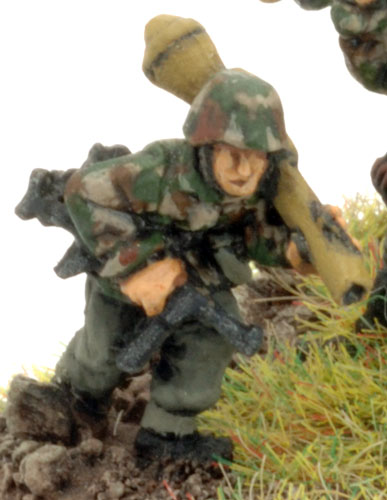
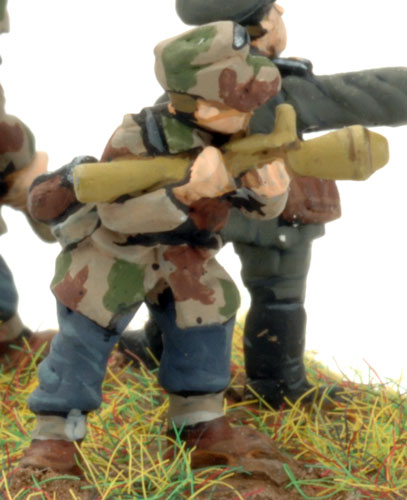
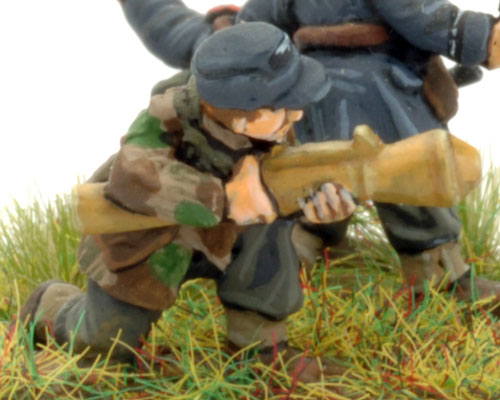
Painted Examples Of The Panzerfaust Figures
Tank Hunters (GE728)Tank Hunters (GE728)Tank Hunters (GE728)Tank Hunters (GE728)
Three of each of the figures shown above are included in the pack.
The Panzerfaust in Flames Of War
TeamRangeROFAnti-tankFirepowerNotes
Panzerfaust4"/10cm1125+Tank Assault 6, Cannot shoot in the Shooting
Step in moved in the Movement Step.

Motorstrelkovy with Panzerfausts (SSO197)

Motorstrelkovy with Panzerfausts (SSO197)


Desperate Measures!Motorstrelkovy with Panzerfausts (SSO197)
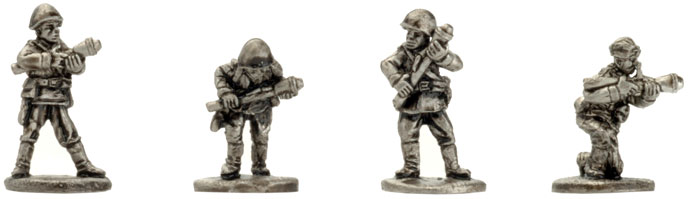
includes four Soviet Infantry Figures armed with Panzerfausts.

The soldiers of the motostrelkovy (motorised riflemen) are the tanks’ own infantry support.

Check out the Motorstrelkovy with Panzerfausts in the online store here...
After the normal shock infantry break open the enemy lines, the tankovy and motostrelkovy pour into the gap. We are on the eve of such a breakthrough, and this one will surely open up the gates into Germany!

Designed by Evan Allen & James Brown
Motorstrelkovy with Panzerfausts (SSO197)
Motorstrelkovy Company Option
Replace up to one SMG team per Motor Rifle Platoon with a Panzerfaust SMG team for +10 points per team.